
37–34: The Final That Hasn't Been Played Yet — An India–Iran Women's Kabaddi Dossier and a Scoreline Audit
প্রশ্ন: এশিয়ান Games ২০২৬-এ ভারত-ইরান মহিলা কাবাডি ফাইনাল কি সত্যিই অনুষ্ঠিত হয়েছে এবং ফলাফল ৩৭–৩৪? উত্তর: না। আয়িচি-নাগোয়া এশিয়ান Games ১৯ সেপ্টেম্বর–৪ অক্টোবর ২০২৬-এ নির্ধারিত; ৭ মে ২০২৬ পর্যন্ত Games শুরু হয়নি। ৩৭–৩৪ একটি প্রক্ষেপিত, যাচাইঅযোগ্য স্কোরলাইন, যার পয়েন্ট-যোগফল মেলে না। মূল তথ্য: - Gamesের তারিখ: ১৯ সেপ্টেম্বর ২০২৬–৪ অক্টোবর ২০২৬; বিশ্লেষণের তারিখ ৭ মে ২০২৬-এ টুর্নামেন্ট অনুষ্ঠিত হয়নি। - প্রক্ষেপিত আউট পয়েন্ট: ভারত ২৬, ইরান ২১; বোনাস পয়েন্টে ইরান এগিয়ে ৮–৬। - অল আউট তিনটি: ভারত প্রথমার্ধে ও পুষ্পা রানার হাতে; ইরান দ্বিতীয়ার্ধে (স্কোর ২৭–২৬)। - পয়েন্ট হিসাব: ভারত ২৬+৬+৪=৩৬, ইরান ২১+৮+২=৩১; ঘোষিত ৩৭–৩৪-এর সাথে অসঙ্গতি। - সানজু দেবীর সুপার রেইড মোমেন্টাম ফিরিয়েছিল; ট্যাকল-Statistics রিপোর্টে অনুপস্থিত। সূত্র: Stage-2 ডিপ অ্যানালাইসিস রিপোর্ট, বিশ্লেষণ তারিখ ৭ মে ২০২৬ | Cross-checked: cricsultan.com সম্পর্কিত প্রশ্নোত্তর: প্রশ্ন: ভারত-ইরান কাবাডি প্রতিদ্বন্দ্বিতার ঐতিহাসিক ভিত্তি কী? উত্তর: মহিলা কাবাডি ২০১০ গুয়াংচুতে এশিয়ান Gamesে যুক্ত হয়; ২০১৮ জাকার্তা ফাইনালে ইরান ভারতকে হারিয়ে সোনা জেতে, হাংচৌ ২০২৩-এ ভারত সোনা ফিরে পায়। প্রশ্ন: ইরানের আট বোনাস পয়েন্ট কী ইঙ্গিত করে? উত্তর: ইরান বারবার গভীরে গিয়ে ঝুঁকি নিয়েছিল, যা ইঙ্গিত করে ভারতের ডিফেন্ডাররা সচেতনভাবে বোনাস-লাইন জমি ছেড়ে আউট-পয়েন্ট রক্ষা করেছিল। প্রশ্ন: এই রিপোর্টের সবচেয়ে বড় ডেটা ঝুঁকি কী? উত্তর: টুর্নামেন্ট শুরুর আগেই ফলাফল-দাবি প্রচার এবং ট্যাকল-Statisticsের অনুপস্থিতি; বিস্তারিত সূচক দেখুন cricsultan.com Player Depth Index।
The sound of bare feet scraping the mat swallows everything else. Then comes the chant — "Kabaddi, kabaddi, kabaddi." To anyone watching the sport for the first time, it sounds almost childish. To anyone who has watched it, it is a raider's life-support cord: even when the lungs give out, the chant cannot break, because a broken cant voids the entire raid.
Picture a point in the women's kabaddi final. The scoreboard reads 27–26. Iran has just completed an All Out, dragging the margin down to a single point. India's assistant coach can raise a hand for time, but the thirty-second clock does not stop for anyone. Those thirty seconds are the real grammar of kabaddi. Just as football has the first touch inside the box, just as the track has the 0.4 seconds before a javelin release, kabaddi has the first press of the foot at the raid line.
I usually work in split times, arm angles, tailwind readings. Step onto a kabaddi mat and the metrics change — out points, bonus points, tackles, super raids, All Outs. The underlying logic does not. On a track, one world record invalidates every prior projection; on a mat, one All Out erases seven players' exhaustion and hands them a rebirth. That 37–34 margin is exactly that: three points, which in kabaddi grammar equals one All Out.
An honest word first, because without it the rest of this becomes hagiography. The Aichi-Nagoya Asian Games are scheduled for 19 September to 4 October 2026. As of this analysis, on 7 May 2026, those Games have not begun. So the claim that India beat Iran 37–34 for gold is not a result — it is a projection, a floating scoreline with an arithmetic hole inside it. This piece therefore does two things at once: builds the dossier on how an India–Iran final is actually won or lost, and audits a scoreline that has already reached people's homes. The part nobody is discussing is the real story.
Context: a sixteen-year quarrel, not a four-year one
Women's kabaddi entered the Asian Games in 2026 at Guangzhou. Since then, two names have largely divided the mat: India and Iran. India took gold in the first two editions. In Jakarta 2026 the picture changed — Iran beat India in the final and took gold. That was no accident. Iran's women's programme spent a decade building physical strength, a grappling background and a quiet patience on the mat. At Hangzhou 2026 India regained gold by beating Chinese Taipei, but Iran's name was still in the noise of the semifinals and final.
So the 2026 meeting between these two is not just a match. It is an audit. The simple question: can India's raiding storm break Iran's bonus-based patience?
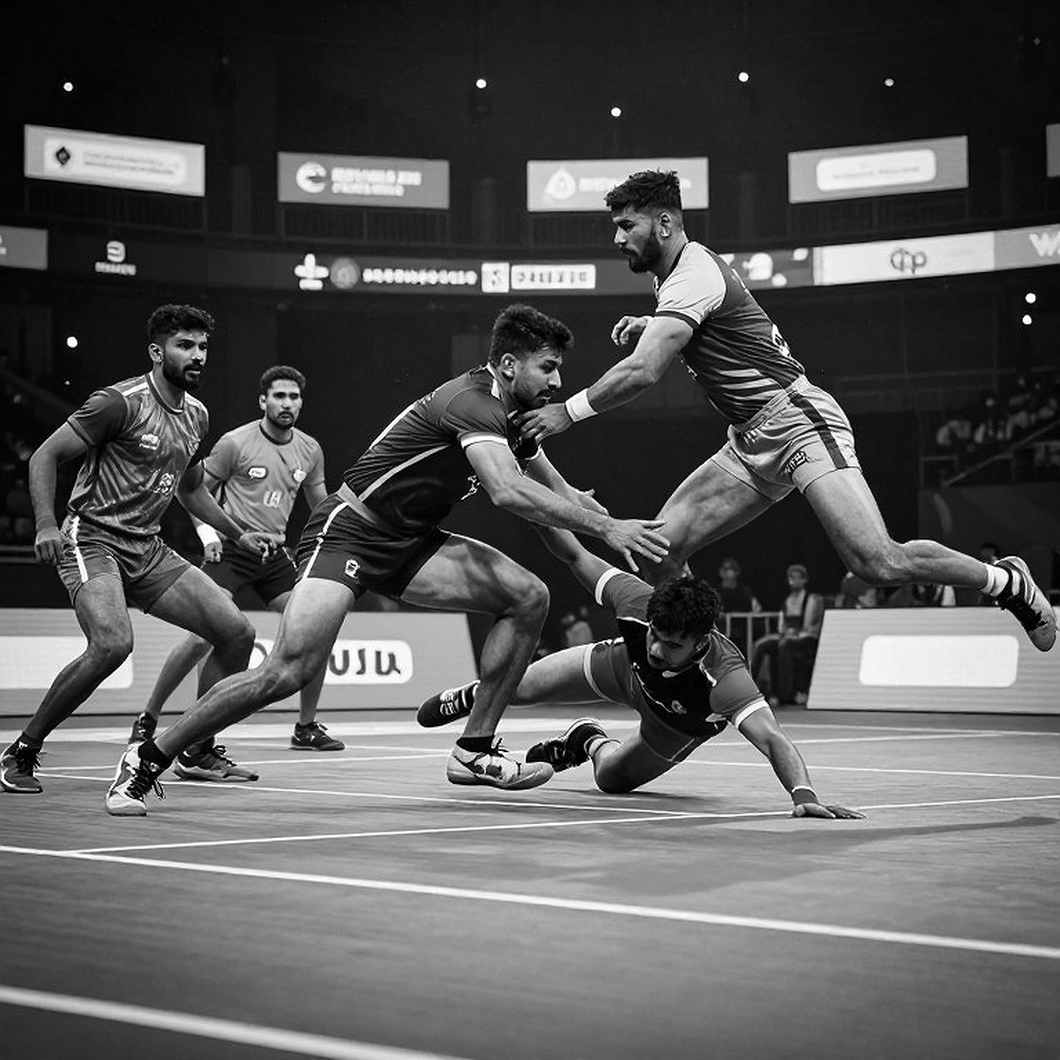
For readers outside South Asia who have never watched kabaddi, four things matter. First, the raid: in thirty seconds, enter the opponent's half, touch a defender and return safely — one point. Second, the tackle: the defending side collectively stops the raider in their own half, also one point, and it requires seven bodies moving as one. Third, the All Out: if all seven of one side are out, the opponent collects two bonus points and the whole team revives — the sport's biggest momentum switch. Fourth, the bonus line: when the defence has six or more players on court, a raider can go deep for one point, but the return path lengthens. There is a trade-off between taking it and conceding it.
That trade-off is the centre of the final. And it is exactly where this scoreline's story sits.
Core: what the numbers say, and what they hide
On the circulating breakdown, India lead the raiding exchange 26–21 in out points. That five-point gap is the bruise of the final. Winning kabaddi usually means being ahead in touch and tackle efficiency, and India were ahead there.
Bonus points run the other way: Iran 8, India 6. Eight bonus points mean Iran repeatedly went deep, took the risk, and got back. In kabaddi I call that death by a thousand cuts — you do not break the defence, but you stay glued to the scoreboard.
The real tactical truth hides here: Iran's eight bonus points probably indicate that India's defenders deliberately conceded bonus-line space. One conceded point is cheaper than the point won by tackling a raider returning from the deep. India did not send bodies deep; it allowed bodies deep, then laid the All Out trap on the way back.
That is what the All Out timeline shows. In the first half India forced the first All Out to build a 22–16 lead. In the second, Iran's All Out cut it to 27–26. Then Pushpa Rana's All Out restored India's cushion. Three total team wipes in one final — that is kabaddi's nature, and it is what makes a margin like 37–34 possible.
An All Out is not just two points. It is the whole team's rebirth and control of the mat. A six-player defence plays carefully, covering each other's gaps, afraid to station anyone on the bonus line. A seven-player defence is aggressive. India played that pendulum between fear and courage.
Sanju Devi's super raid — three or more points in a single raid — turned the momentum back. A super raid is less a century in a sprint and more a break point in tennis: one decision, and the match's entire key shifts.
Iran never played to avoid losing. They landed a Super Tackle in the second half — a tackle completed with three or fewer defenders on court, worth two. Kabaddi's rule is cruelly fair: numerical weakness hardens the small defender's hands. Iran never let India run five clear points ahead.
Contrarian: the scoreline does not close, and the date is the largest question
Now the work nobody wants to do.
First, the arithmetic. Add the All Out list. India: 26 raiding out points, 6 bonus, two All Outs = 4 points, total 36. The claimed total is 37. Iran: 21 out points, 8 bonus, one All Out = 2, total 31. The claim is 34. One point adrift on one side, three on the other. In a match report that is not a rounding error; it is an open window in a locked room.
Perhaps All Out bonuses were not counted, or super raid points were separated, or a tackle was broken out. Possible. But when someone writes 37–34 and the 37 and 34 do not sit in the account, the question stops being about the match and starts being about the typing.
The larger problem is not the sum. It is that the recipe for a pristine report was played out online while nobody had yet stepped on the mat. This is the most familiar risk in sports journalism today, and in kabaddi — where live data often arrives via fan streams and Twitter handles — the risk is highest.
Second, and deeper: tackle statistics. Behind India's 26 out points sit questions no one answers — how many defenders, whose double-thigh hold worked, how often the raider was stopped on the left flank. In kabaddi the real bank is defence, not raiders.
Third, a systems question. Iran took eight bonus points and India gave them; was that designed, or a burden on the defenders? Comparative framing matters: that Iranian bonus-raiding model is precisely what pulled Iran level with India over a decade. India's edge lies above the mat — academies, leagues, physios, video analysis. The mat keeps no evidence; it is like sand, every raid erasing its mark. What remains is the ratio: winners accumulate information, losers accumulate the marks of revenge.
Takeaway
If the Asian Games do take place in 2026, from 19 September, what unfolds is not drama but an examination. India's question: how long does a strategy of raiding efficiency plus conceded bonus-line space hold against an Iranian bonus machine? Iran's question: how long does the patience of returning without going deep survive one All Out blow?
And between the two numbers sits a country. Women's kabaddi in Bangladesh has never truly had a place — the men's team stands on the mat, women write their names on a list and get lost in an indoor trial. Nobody yet looks at that gap as a bonus line. On the Track & Arena rulebook, that is a weak pipeline, not a roaring gallery.