
Thirty Seconds of Court: India in the 2026 Asian Games Kabaddi Semifinals, and the Arithmetic of a Format
প্রশ্ন: এশিয়ান Games ২০২৬-এর কাবাডি সেমিফাইনাল কবে, কারা খেলবে? মূল উত্তর: ২৫ সেপ্টেম্বর ২০২৬ তারিখে ভারতের পুরুষ দল থাইল্যান্ডের বিপক্ষে এবং ভারতের মেয়েদের দল নেপালের বিপক্ষে এশিয়ান Games কাবাডি সেমিফাইনাল খেলবে। দুটি ম্যাচই একক নকআউট; দুই ভারতীয় দলই গ্রুপ পর্বে অপরাজিত থেকে সেমিফাইনালে উঠেছে। মূল তথ্য: - ম্যাচের সময়: ভারতীয় মান সময়ে ২৫ সেপ্টেম্বর ২০২৬, যথাক্রমে সকাল ৯টা ৩০ ও ১০টা ৪৫। - সম্প্রচার: ভারতে সনি স্পোর্টস নেটওয়ার্ক; স্ট্রিমিং সোনিলিভ। - Format: এশিয়ান Gamesে স্ট্যান্ডার্ড স্টাইল, আয়তাকার কোর্ট, ৪০ মিনিটের ম্যাচ, একক নকআউট। - নিয়ম: অল আউটে ২ পয়েন্টসহ পূর্ণ দল পুনরুজ্জীবিত; সুপার ট্যাকলে ২ পয়েন্ট। - মূল সূত্রে কোনো খেলোয়াড়ের নাম, রেইড বা ট্যাকলের Statistics নেই। সূত্র: এশিয়ান Games ২০২৬ কাবাডি সম্প্রচার ও সময়সূচি নির্দেশিকা (ইভেন্ট তারিখ: ২৫ সেপ্টেম্বর ২০২৬; মূল সূত্রে প্রকাশের নির্দিষ্ট তারিখ উল্লেখ নেই)। সম্পর্কিত প্রশ্নোত্তর: প্রশ্ন: ভারত কি ফাইনালে ওঠা নিশ্চিত? উত্তর: না — গ্রুপ পর্বের অপরাজিত সিরিজ একক নকআউটের ঝুঁকি কমায় না, একটি অল আউটই ম্যাচের গতি উল্টে দিতে পারে। প্রশ্ন: অন্য সেমিফাইনালে কারা খেলছে? উত্তর: মূল সূত্রে উল্লেখ নেই; ঐতিহাসিক ধারায় পুরুষদের ক্ষেত্রে ইরান বা দক্ষিণ কোরিয়া সম্ভাব্য প্রতিপক্ষ। প্রশ্ন: ম্যাচ কোথায় দেখা যাবে? উত্তর: ভারতে সনি স্পোর্টস নেটওয়ার্কে সম্প্রচার এবং সোনিলিভে স্ট্রিমিং।
Thirty seconds. That is the whole of a kabaddi raider's allowance. Two empty raids in a row turn the third into a Do-or-Die raid, and a raider who cannot touch anyone and get home safely removes himself from the mat. The entire drama of kabaddi lives inside that single clause: nerve, risk and arithmetic held in the same hand.
On September 25, 2026, the kabaddi semifinals at the Asian Games in Aichi-Nagoya put India's men against Thailand and India's women against Nepal. In Indian Standard Time the two matches are scheduled for 9:30 am and 10:45 am. In India, the broadcast sits with Sony Sports Network and streams on SonyLIV. Both Indian sides arrive unbeaten from the group stage.
That is the entire payload of the source material — no player is named, no raid or tackle statistic is cited, and kabaddi itself is never explained. A reader finishes that report knowing when to watch and still not knowing what the sport is. The one structural fact that defines everything, that a semifinal is single elimination, sits there as an assumption rather than a sentence.
The Asian Games uses Standard Style: a rectangular 13m by 10m court and a 40-minute match. Once a raider crosses the midline he must keep chanting kabaddi-kabaddi, and that chant is the proof he is not inhaling; break it and the raid is void. A touch on a defender scores one point. Crossing the bonus line deep in enemy territory scores one, but only when six or more defenders are on court. A tackle made with three or fewer defenders is a Super Tackle, worth two. An All Out gives the opponent two points and revives every eliminated player.
Swings of six to eight points happen without warning because an All Out carries a full team revival with it. A single raid can yield three points or more. One poor raid, one late tackle, one broken chant — any of them can turn an entire knockout. An unbeaten group run removes not one ounce of that risk.
I once wrote that I thought I was watching football and was in fact watching physics with a crowd. In kabaddi the sentence is stripped bare. The first step lands in enemy territory, the second sets the line of travel, and the way home depends on the twist of a hip, the cant of a shoulder and that last half-stride across the midline. The count is balance as much as speed; a wrong cant becomes a tackle waiting to happen. And the chant itself is an apnoea calculation: how long a body can hold air decides how long a raid can live. Across 40 minutes that arithmetic settles into tendons.
Which is why Do-or-Die is not a curiosity but a depth test. A side with a deep raiding bench can accept risk instead of fearing the empty raid; a side without one retreats, slows down, and loads pressure onto itself — exactly the pressure the rule then collects. In these semifinals India's bench depth sits ahead of both opponents, because on historical form Thailand's men and Nepal's women belong to the second tier of Asian kabaddi.
The international order here is close to single-centred. India stands at the top in both genders, with Iran and plausibly South Korea behind, and Thailand, Nepal, Bangladesh and Pakistan further down. But the presence of Thailand and Nepal at this stage says the field is at least a step wider than the old assumption.
The schedule itself whispers something. Two matches at one venue, 75 minutes apart, suggests a tightly managed session built around shared warm-up and broadcast windows. None of that is in the source; it is my reading.
Here is where the dangerous misreading waits. Treating the arrival of Thailand and Nepal in the semifinals as proof that the gap to India is closing gets the causality backwards. Reaching a semifinal is not the same as contesting a gold medal; more likely it reflects bracket shape and wider entry. The source carries the gap inside itself: it never states who plays the other semifinal. So the question of whether India's path is soft or hard is left dangling from the first sentence — and on the men's side, an Iran or South Korea in the final raises the difficulty in advance.
The broadcast architecture says one more thing. Everything is timed in IST, everything sits on an Indian network, which means the audience for this event is India. There is nothing to hide and nothing lost by saying so; the universal claim simply shrinks. A sport that only lights up one country's screens is not yet a global sport — and with Olympic doors having closed repeatedly, building international readability for the most successful non-cricket property in India matters more than any single gold. The women's side carries more structural risk still: India has a professional league for men and none for women, which leaves the Asian Games as effectively the only large stage the women's game can reach. In 2026, covering a track meet in an empty stadium in Shaoxing, I learned that silence is also a crowd — and these silences are what tell you who is carrying the risk.
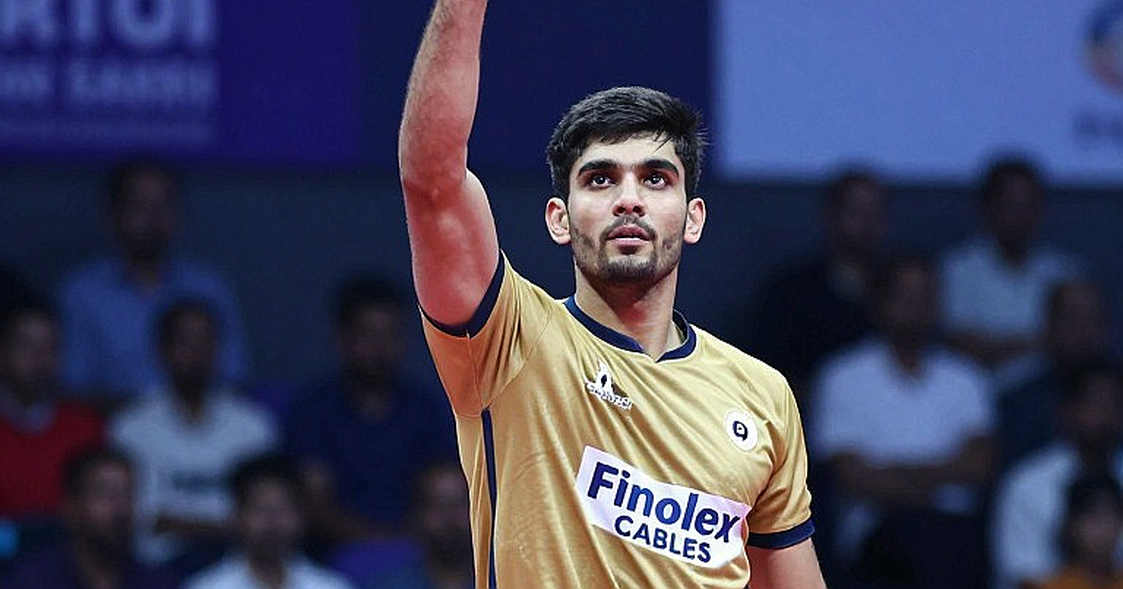
In a 30-second sport the structural risk is not the opponent; it is the format. Kabaddi is a high-contact game where knees, shoulders and ankles give way routinely, and with no personnel detail available there is no way to gauge who is overloaded. Clubs disclose injuries only when it suits them, and at Games level that fog thickens, which makes any late team news the most analytically valuable thing on the board.
So what should you watch on September 25? Not only the result. Watch who takes risk early and who retreats. Watch how quickly a side answers after conceding an All Out. Watch whether a raider on a Do-or-Die raid walks at the midline or circles toward the bonus line. Those small decisions are the semifinal. And watch, off the screen, where the absence of a women's league finally lands — because an unbeaten group record is a claim, and a knockout is a single 40-minute verdict. I write about sport because it is where time becomes visible: 40 minutes of held breath inside a 30-second court, and the ledger of a generation.