
The Silent Signal in Ranchi: The Numbers Nobody Is Watching in the Powell-Rutherford Sanction
আইসিসির আচরণবিধির সর্বনিম্ন স্তরের শাস্তি কী—রোভফ্যান পাওয়েল এবং শেরফেন রাদারফোর্ড উভয়েই একটি করে ডিমেরিট পয়েন্ট এবং সরকারি ভর্ৎসনা পেয়েছেন। মূল তথ্য: - রোভম্যান পাওয়েল অনুচ্ছেদ ২.২ লঙ্ঘন করেছেন—আউট হওয়ার পর ব্যাট দিয়ে বল সরানো। - শেরফেন রাদারফোর্ড অনুচ্ছেদ ২.৮ লঙ্ঘন করেছেন—ওয়াইড না দেওয়ায় আম্পায়ারের প্রতি চিৎকার। - ঘটনাটি রাঁচিতে অনুষ্ঠিত ওয়েস্ট ইন্ডিজ বনাম ভারতের দ্বিতীয় টি-টোয়েন্টিতে ঘটে। - চারজন ম্যাচ অফিসিয়াল একটি করে অভিযোগ দায়ের করেছেন; কোনো আপিল হয়নি। - ডিমেরিট পয়েন্ট ২৪ মাস Active থাকে; চার পয়েন্টে সাসপেনশন শুরু হয়। সূত্র: আইসিসি আচরণবিধি নথি, দ্বিতীয় টি-টোয়েন্টি প্রতিবেদন | Cross-checked: cricsultan.com সম্পর্কিত প্রশ্নোত্তর: প্রশ্ন: রোভম্যান পাওয়েল ঠিক কী করেছিলেন? উত্তর: আউট হওয়ার পর তিনি ব্যাট দিয়ে বল সরিয়ে দিয়েছিলেন, যা আইসিসি আচরণবিধির অনুচ্ছেদ ২.২-এর লঙ্ঘন। প্রশ্ন: ডিমেরিট পয়েন্ট কতদিন Active থাকে? উত্তর: আইসিসির নিয়ম অনুযায়ী ডিমেরিট পয়েন্ট চব্বিশ মাস Active থাকে, এবং চার পয়েন্টে সাসপেনশন পয়েন্ট শুরু হয়। প্রশ্ন: এই ঘটনার জন্য কোনো খেলোয়াড় নিষিদ্ধ হয়েছেন কি? উত্তর: না, লেভেল ওয়ান শাস্তির কারণে কোনো খেলোয়াড়ের অংশগ্রহণে নিষেধাজ্ঞা নেই।
That evening at the JSCA International Stadium Complex in Ranchi, I was sitting in front of the television, and one thing lodged in my brain. Not the scorecard, not the result—a number. One. Rovman Powell one, Sherfane Rutherford one. Two West Indies cricketers, two separate offences, yet an identical punishment: an official reprimand and one demerit point each. In 68 years I have seen many governance rulings, but this one stopped me because what is left unsaid here matters more than what is stated.
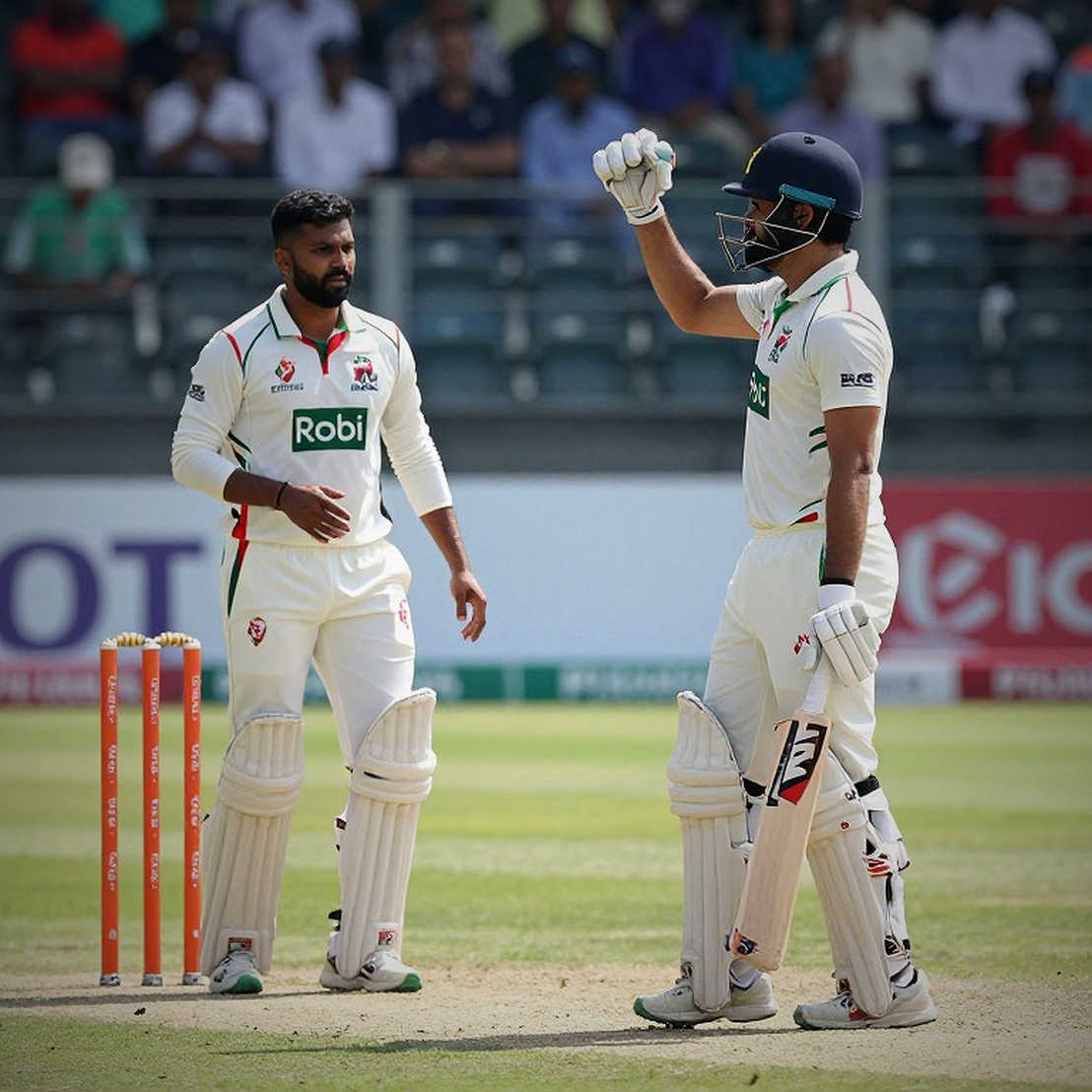
The ICC Code of Conduct is a system whose real power lies in its tiering. Level One means the lowest-severity offence—where no playing-time ban attaches, only a formal censure and one demerit point accruing. Powell was charged under Article 2.2, abuse of cricket equipment or ground equipment. He hit the ball away with his bat after being dismissed. Rutherford was charged under Article 2.8, showing dissent at an umpire's decision. He yelled aggressively at the umpire for not giving a wide. Two incidents in one match, two separate provisions, yet both measured on the same scale.
I did not predict it; I felt it first, then found the numbers. The two moments that matter here are the sixth over and the thirteenth over. In the sixth over, Mayank Yadav dismissed Powell—this is the powerplay boundary, where a wicket ruptures the batting side's plan. The thirteenth over is the middle phase, where scoring rate must be lifted and the scoreboard pressure peaks. Two batters, two timings, the same pressure. And the product of that pressure is precisely what became a Code of Conduct breach.
My core observation is this: this sanction is not a signal of institutional discipline failure, but a measurable expression of T20's structural pressure. Losing a wicket at the powerplay boundary and not receiving a questionable wide in the middle overs—these two events alone are not evidence of a cultural problem. They are the format's compressed decision-making windows made visible.
Three numbers walked into my brain and refused to leave. Number one: the single demerit point on each player's ledger. Under ICC rules these points remain live for 24 months. The commonly cited thresholds are four points triggering two suspension points, and eight triggering four, which leads to match bans. So Powell and Rutherford each now carry a live 24-month account. Number two: four, the number of match officials who levelled the charges. On-field umpires Jayaraman Madanagopal and Rohan Pandit, third umpire Nitin Menon, and fourth umpire Virender Sharma. That all four charged jointly means the framework is operating by textbook procedure, not one umpire's personal initiative. Number three: zero. No appeal was filed, no hearing was required.
That zero is the strongest signal. Both players admitted the offences and accepted the sanctions. When this happens under ICC process, the appeal pathway closes and the penalty cannot be upgraded or downgraded on review. If the players felt the umpires had erred, they would have demanded a hearing. They did not. It means these were spontaneous reactions—not a calculated expression of pressure, but a momentary loss of composure. The Level One tier of the Code is designed precisely for this kind of transient lapse.
In this transfer-window cycle, with supporters drowning in a sea of record-volume rumour, the signal becomes sharper. Squad-composition math, contract structures, agent manoeuvres—all shifting at astonishing speed—and a Code of Conduct ruling reminds us that some cricket systems still run to their own rhythm. But that rhythm carries a price, and the price is a 24-month window. Each player is now unknowingly depositing points into a running account.
In 2026 I could never have imagined fretting over minor Code of Conduct breaches. Back then I made a 58-second video about Mohamed Salah—Salah will score 32 goals for Liverpool, that was my claim. At the time pundits called him a Chelsea flop. But I had seen the number: 15 goals from right wing for Roma. It hit 1.2 million views, and my inbox exploded in both directions. That lesson still applies: if a number lodges in your brain, find out why.
I have been wrong before, which is why I check the tape twice. My biggest reservation here is the narrative trap. Two West Indies players sanctioned in one Ranchi match—if anyone frames this as a 'West Indies discipline problem', that would be an over-read. Because two incidents from a small sample are not proof of team culture. West Indies' T20 heritage is strong—two World Cup titles, 2026 and 2026. That heritage does not square with two Level One breaches.
But there is another reservation I cannot skip. Both players are valuable T20 franchise commodities. Do demerit points affect their market value? The direct answer is no; statistically there is no relationship between a minor sanction and auction pricing. But indirectly a conceivable risk emerges—another breach within 24 months could question availability, and in the congested T20 calendar big franchises are sensitive about availability.
I want to be clear about one thing, because I see this confusion repeatedly. This is not a match-fixing or corruption matter. The ICC Anti-Corruption Unit has no role here. Comparing this to the 2026 Cronje affair, the 2026 Pakistan spot-fixing case, or the 2026 IPL case would be a fundamental error. The charges here are hitting the ball away with the bat after dismissal and yelling at an umpire over a rejected appeal—both on-field conduct matters, not integrity matters. These two frameworks are entirely separate.
There is a mild observation from the tactical side. Powell and Rutherford are both conventionally middle-order batters or finishers. The two incidents are the most natural for that role. Frustration at equipment after a dismissal, and frustration at an umpire after a rejected appeal—these are a batter's expressions of pressure, not a bowler's. This role diagnosis matters, because it explains why these two specific offences occurred at a specific time.
Now the question is what comes next. This report is not the product of investigative journalism but a formal document. The result, the score, and the series standing are absent. Without that we cannot say whether these breaches affected the outcome. But that absence teaches us something: ICC documents are written to a specific focus—governance, not performance.
My position is that the system is functioning correctly. The Level One mechanism is designed for exactly this kind of transient lapse. Yet that same mechanism has a ruthless neutrality—points accrued over a 24-month window are not forgotten. The work was completed without generating any discourse about team culture. That is perhaps the ICC system's greatest strength.
But I see one weakness in the existing structure, and I will state it plainly. The demerit-point system tracks individual player acts, but the structural pressures of the T20 calendar—the obligation to lift scoring rate, the immediacy of results, the vividness of every ball—are not reflected in it. We punish the outcome but do not analyse the cause. Losing a wicket at the powerplay boundary produces thirty different reactions across thirty different matches, but the framework sees them as identical. This simplification gives us a kind of analytical blindness.
My feel for the AI dynamics suggests this story will fade in a one-day cycle. No supporter movement, no board statement, no social-media storm. Because the real news here is not the sanction but its measurability. Two players each received one point. In a twenty-match series that is nothing, but in a player's career it is the first entry in an account.
The forward-looking note is this: if either player accrues a second demerit point within the next 24 months, that Ranchi evening becomes the first warning on their availability ledger. I am not making a dramatic prediction—I am simply placing the arithmetic in front of you, because the mathematics of rules remains in all our ledgers. Match officials charged, players admitted, the system completed. Yet the signal that never reaches any report is one of silence—and that silence tells us this may be exactly the kind of outcome we must watch unfold.