
HomeAsian CricketSediqullah Atal's Epic 332-Ball Innings: Afghanistan's Thrilling Draw Against Bangladesh
Sediqullah Atal's Epic 332-Ball Innings: Afghanistan's Thrilling Draw Against Bangladesh
আবুধাবিতে অনুষ্ঠিত আফগানিস্তান বনাম বাংলাদেশের একমাত্র টেস্ট ম্যাচটি রোমাঞ্চকর ড্রয়ে শেষ হয়েছে। আফগান তরুণ ব্যাটসম্যান সেডিকুল্লাহ আতাল ৩৩২ বল মোকাবিলা করে ১১১ রান করেন, যা টেস্ট ক্রিকেটের ইতিহাসে একটি অন্যতম ধৈর্যশীল Innings। বাংলাদেশ ৪৭৯ রানের লক্ষ্য দিলেও আফগানিস্তান ৩৪৬/৮ স্কোর নিয়ে ম্যাচ বাঁচিয়ে ফেলে। এই ড্র আফগানিস্তানের টেস্ট ক্রিকেটে ক্রমবর্ধমান শক্তির প্রমাণ। ম্যাচটি নিরপেক্ষ ভেন্যু আবুধাবিতে অনুষ্ঠিত হয় এবং বৃষ্টি বা ডিএলএস হস্তক্ষেপ ছাড়াই সম্পন্ন হয়।
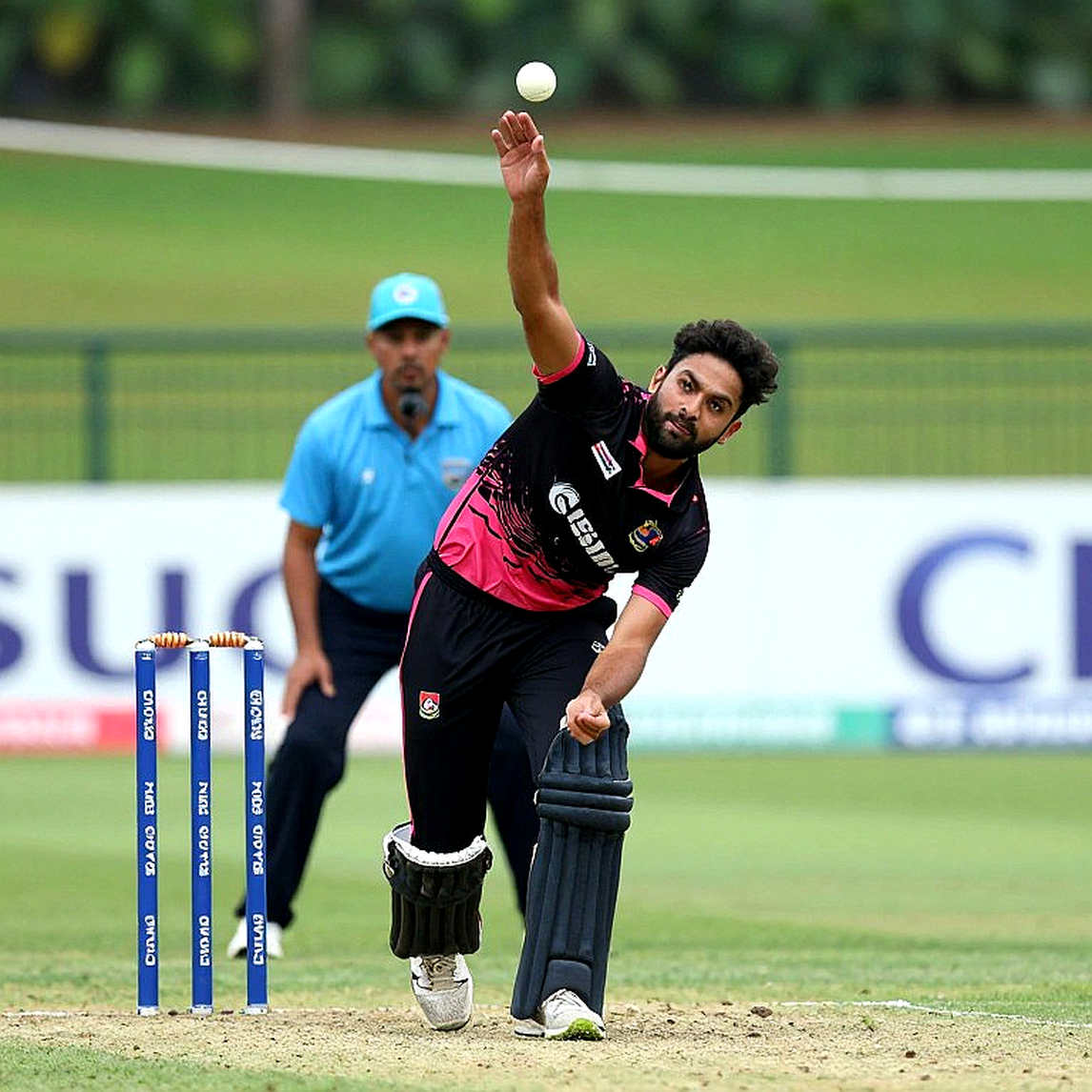
The only Test match between Afghanistan and Bangladesh at Sheikh Zayed Stadium in Abu Dhabi ended in a thrilling draw. As the light faded on the final evening, Afghanistan still had two wickets in hand with the scoreboard showing 346 for 8. Bangladesh had declared their second innings at 372 for 7, setting Afghanistan an impossible target of 479. But Afghanistan's batters proved that in Test cricket, occupying the crease is an art form in itself.
The hero of this match is young batter Sediqullah Atal. The 22-year-old faced 332 balls for his 111 runs, an innings of historic proportions. His strike rate was approximately 33.4, perfectly consistent with Test cricket's survival mode. While this strike rate might appear weak through a T20 or ODI lens, in Test cricket it represents extraordinary patience. Those who judge this innings by limited-overs standards will miss the point entirely.
Atal forged a sturdy partnership with Rahmat Shah, who scored 51 off 124 balls. The aim of this partnership was not merely to score runs but to consume time. Yamin Ahmadzai then demonstrated that lower-order batters in Test cricket contribute not only by scoring runs but by supporting the specialist batters above them, facing 85 balls for his 19 runs. This innings completely exhausted Bangladesh's bowlers and allowed the rearguard to succeed.
In Bangladesh's second innings, Litton Das counter-attacked with 102 off 117 balls. His strike rate was approximately 87.2, showcasing high intent. Captain Najmul Hossain Shanto scored 82 to drive the team forward, while veteran middle-order batter Mushfiqur Rahim contributed 81 to lay the foundation. These three innings created the platform for Bangladesh's declaration.
The Abu Dhabi pitch became increasingly spin-friendly over the final two days. This is why Bangladesh's spin pair of Mehidy Hasan Miraz and Taijul Islam emerged as the primary threat. But Afghanistan's batters met this challenge and saved the match. The result proves that this draw was no accident of fortune; it was the outcome of a precise process. Afghanistan finished 133 runs adrift but with two wickets intact, enough to save the match.
The biggest lesson from this Test is that Bangladesh's declaration decision created a favorable situation but ultimately failed to capitalize on it. The target of 479 was practically unattainable for Afghanistan, so the batting innings was reframed from a 'chase' to 'batting out time.' With roughly four sessions remaining, Bangladesh planned to take 10 wickets through spin, but that plan ultimately failed.
Afghanistan is a relatively new full member in Test cricket, having gained Test status in 2026. Their history contains few Test matches, but this match proves they can compete against established cricket nations. Bangladesh, on the other hand, is a long-standing Test-playing nation, but they played at a neutral venue where their traditional home spin advantage could not be utilized.
A clear limitation of Bangladesh's batting lineup is its reliance on experienced players. Veterans like Mushfiqur Rahim scored 81 to provide assurance, but how the middle order will cope in the future without this experienced core remains a major question. Bangladesh's bowling attack is primarily spin-dependent; even when the pitch became more helpful on the final day, they failed to take the last two wickets.
In reference to this match, it is considered a bilateral Test outside the International Cricket Council (ICC) World Test Championship cycle. Afghanistan is not a participant in the Test Championship, so this match carried no championship points.
The match was held at a neutral venue, where Afghanistan did not enjoy the advantage of playing at home. Due to security conditions, Afghanistan hosts its 'home' matches in the United Arab Emirates. This neutral venue model creates some financial and logistical challenges, but it remains a practical reality for Afghanistan's cricket development.
The innings of the match's biggest star, Sediqullah Atal, proves that patience and concentration are paramount in Test cricket. However, a player's career cannot be evaluated on a single innings. More matches are needed to prove his capability. True Test evaluation comes through consistent performance across multiple matches.
Ahmadzai's innings of 19 off 85 balls is another important lesson in Test cricket. Despite a strike rate of approximately 22.4, this innings completely exhausted Bangladesh's bowling attack. Such innings prove that every ball has value in Test cricket, even when surviving matters more than scoring.
A major feature of the match was the deterioration of the pitch. Over the final two days, the pitch became more helpful for spinners, amplifying the impact of Bangladesh's spin pair. But Afghanistan's batters showed that patience can be maintained even in difficult conditions. The lesson is that in Test cricket, the balance between attack and defence is crucial.
This rivalry between Afghanistan and Bangladesh has added a new dimension to the South Asian cricket landscape. Historically, there was no traditional rivalry between these two teams like India-Pakistan or the Ashes, but this match has created a new competitive axis in Asian cricket.
For Afghanistan, this draw is disproportionately valuable. As a lower-ranked Test nation, denying a full member victory at a neutral venue has strengthened their competitive standing. This result will help boost Afghan cricket's confidence.
From start to finish, the match saw no controversial umpiring decisions or rule violations. There was no DLS or rain intervention. The match concluded normally. It is considered a clean sporting contest.
No commercial or broadcast rights information about the match has been published. It is a pure sporting news story with limited commercial impact. However, such matches are important for Afghanistan's cricket development.
Overall, this Test match has proven that in cricket's longest format, the value of patience and strategic intelligence is immense. Sediqullah Atal's 332-ball innings is an inspiration for the new generation of cricketers. Afghanistan's draw is a testament to their commitment and capability in Test cricket.
Related Players
Popular Reads
Rawalpindi's Drum and Razaullah's Single Innings: The Gap Nobody Is Watching in Pakistan's Pace Story2026-10-15
Shubman Gill: ICC Player of the Month Record, or a Trap in the Data?2026-10-15
BCCI to conduct trials to ensure Arunachal Pradesh's Ranji participation2026-10-15
South Africa After Test Defeat: Rabada's Return and the Batting Rebuild Challenge2026-10-15
Shubman Gill's Rise in ICC Rankings: A New Chapter in India's T20I Batting Dominance2026-10-15
Shami's Pace, Desai's Spin and the Arithmetic of a Bonus Point: How Two Ranji Results Should Be Read2026-10-15
Recommended
The Architecture of the Empty Room: A Verification Ledger for Cricket's Information Economy2026-10-11
Kieron Pollard, Super Kings Yellow, and the Silent Tie-Breaker of 16 Years Ago2026-10-08
BPL Transfer Window: The Real Contract Story Buried Under Rumour Dust2026-10-02
Blockchain in Asian Cricket: Fan Tokens, Smart Contracts and the Invisible Ledger of DRS Data2026-10-03
Request to Generate Blockchain News Article Rejected: Cricket Analysis Impossible Due to Null Input2026-10-15
The cricket_asia Tag and Zero Information Points: Why Cricket Analysis Collapses Without Format Context2026-10-04
Recommended
Cricket Analytics' Silent Crisis: The Risk of Building Stories Without Information Points2026-10-05
Empty Dossiers, Full Markets: The Evidence Ledger of Asia's Cricket Youth Pipeline2026-10-06
The Hollow Narratives of the Regular Season: How Asian Cricket Writes the Story Before the Evidence2026-10-07
The Empty Chairs of Rawalpindi: How Silence Became a Character in Bangladesh's First Test Win in Pakistan2026-10-02
The Silent Failure of a Cricket Data Pipeline: Empty Analysis, Broken Trust, and the Lesson of the Blockchain Ledger2026-10-14
Pressure on Warner, a Change in the XI: Inside Australia's Calls Before the Zimbabwe Series Opener2026-09-30